Black Hawk
Mariners' Museum, Uncurated Search Results
Type: Bugeye
Year: 1893
Builder:
Location: Crisfield

These records are found in the online catalog of The Mariners’ Museum and Park in Newport News, Virginia. Uncurated search results are presented to give researchers and interested readers an idea of whether the museum’s archives contain information about this vessel and whether it may be worthwhile to visit the museum’s catalog search page for further investigation. Uncurated results may be inaccurate or incomplete.
Search mode: Exact Name. Search phrase(s): "Black Hawk". Results returned: 20. Results displayed in this table: 20.
Use these buttons to send uncurated search results to your own app or text document for further research. First, check the box for any row, or click "Select All" then uncheck any rows. Then click "Show Selections". You can then copy your selections from the text box and past them into your app.
| Fetch? | Row ID | Media | Date | Vessel | Place | Related Places | Inscription/Marks | Subject | Notes | Archive Number |
|---|---|---|---|---|---|---|---|---|---|---|
| 1 | 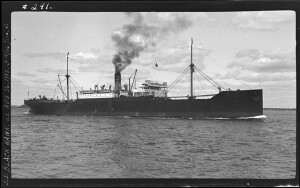 | 8/26/1933 | Black Hawk (Steamship : 1932). | S.S. Black Hawk. U.S. Aug 26. 1933. f11/16 1/100. V. / #291. | Steamboats.; Bodies of water.; Merchant ships. | Broadside view of the Black Hawk under way. | P0006/02.01-01.0265#02 | |||
| 2 | 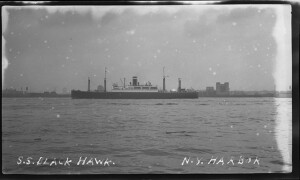 | Before 1965 | Black Hawk (Steamship : 1932). | New York Harbor (N.Y. and N.J.). | Ships–New York Harbor (N.Y. and N.J.).; Shorelines–New York Harbor (N.Y. and N.J.). | Broadside view of the Black Hawk in midstream. There are buildings on the shoreline in the background. | MS0091/03.01-65#012 | |||
| 3 | 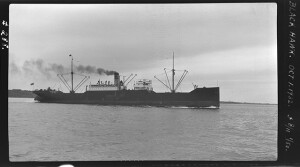 | 10/1/1932 | Black Hawk (Steamship : 1932). | Black Hawk. Oct. 1. 1932. f8/11 1/50. / 288 | Steamboats.; Bodies of water.; Merchant ships. | Broadside view of the Black Hawk under way. | P0006/02.01-01.0265#01 | |||
| 4 | No image URL. | Black Hawk | P0001.011/01-0399 | |||||||
| 5 | No image URL. | Steamboats–History. Great Lakes (North America); Black Hawk War, 1832. | Steamboats and the Black Hawk War. | LB98232 | ||||||
| 6 | No image URL. | Mail steamers–Falkland Islands. | Black Hawk incident at Montevideo in 1880. | LB83518 | ||||||
| 7 | 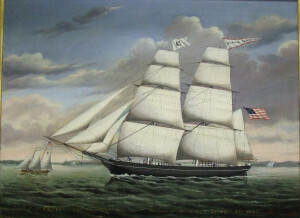 | NOTES: Written along the bottom of this painting is: Packet Brig ELZIRA, Capt. W.N. Hunt, Entering Harbor of N.Y., Friday 12 June 1852. There is another signature/inscription at the lower right corner in red with the date 1857. Newspapers do show that a packet brig named Elzira captained by Hunt was active in 1852. VESSEL INFORMATION - VESSEL NAME: BLACK HAWK VESSEL TYPE: PILOT SCHOONER, 2 MAST/BRIG SHIP BUILDER: WILLIAM H. WEBB VESSEL BUILT: CALAIS, MAINE SHIP OWNER: BUCKLIN AND CRANE, NEW YORK SHIP'S CAPTAIN: CAPTAIN B. P. BOWERS | CL8743 | |||||||
| 8 | No image URL. | Black Hawk (Minehunter, coastal : MHC-58). | Contains black and white photographs. | MS0817/01-17.294 | ||||||
| 9 | 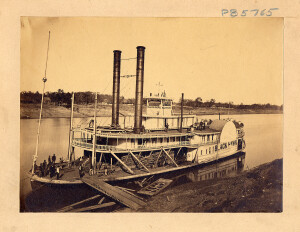 | Steamboats.; Paddle steamers | CURATOR NOTES:Portside view of paddle wheeler docked at rivers edge. Passengers and crew seen on main deck at bow. Lumber stacked on main deck. Collection Mrs. I.G. Redpath, September 1943 | P0001.003/01-#PB5765 | ||||||
| 10 | 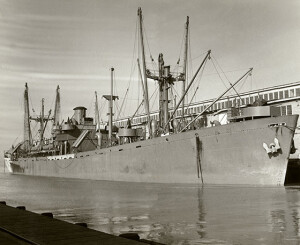 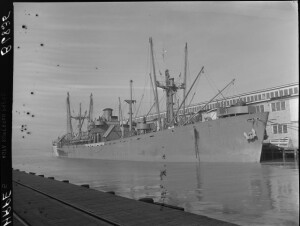 | 3/10/1944 | Black Hawk (Steamship : 1943). | B6835 - Broadside view of the HR 39 docked at the south side of pier 4, HRPE, Newport News, Va., just prior to sailing. 3-10-44 Official Photograph, U. S. Army Signal Corps, HRPE, Newport News, Va. "CONFIDENTIAL" stamped in red ink | Front quarter view of the Black hawk at pier. Shot from a nearby pier, the wooden pier is visible at the bottom of the image. | P0003/01-#B-6835 | ||||
| 11 | No image URL. | Triumph in defeat : __Black Hawk's 1833 visit to Virginia | LB104553 | |||||||
| 12 | No image URL. | INVENTORY: case - there is one (1) component part. NOTES: Half model with mirror background, upon which the model is reflected, giving the appearance of a full model. VESSEL INFORMATION-- VESSEL NAME: SANTA CATALINA VESSEL TYPE: Steel screw schooner SERVICE DATES: 1913 SHIP BUILDER: William Cramp & Sons BUILDER LOCATION: Pennsylvania, Philadelphia VESSEL HISTORY: Taken over by the Navy Department in 1919 and renamed USS BLACK HAWK. She was carried on the 1947 US Navy List as Destroyer Tender AD-9, Mare Island, California. Lost at Manilla during World War II. SHIP OWNERS: Atlantic & Pacific Steamship Co.(controlled by W.R. Grace & Co.); Navy Department VESSEL DIMENSIONS: 6,309 gross tons; 404'6" x 53'8" x 26'3" ALL SHIP NAMES: (1) SANTA CATALINA (SCREW SCHOONER: 1913-1917), (2) USS BLACK HAWK (DESTROYER TENDER, AD-9: 1918-1946) | CL14617 | |||||||
| 13 | No image URL. | Monitor (Ironclad : 1862).; Virginia (Ironclad : 1862).; Cumberland (Sloop-of-war : 1857).; Black Hawk (Side wheel steamer : 1862).; Roanoke (Frigate : 1857). | Fort Monroe (Va.).; Vicksburg (Ms.)–History–Siege, 1863. | Typescript of summary of orders for Gunner Eugene Mack. Copies of the various orders are also in the Reference File. | LB104766 | |||||
| 14 | 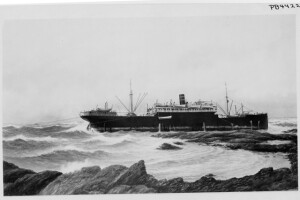 | 1921 | SPAIN | on verso: Built 1904 at Vegesack by Bremer Vulkan; owned by U.S. Shipping Board. Scrapped 1924. | Copy of lithographic print showing starboard side of ship stranded on the coast of Spain, summer 1921. Refloated by American salvagers. Alternate Name: Black Hawk, Rhaetia. | MS0163/01-#2133 | ||||
| 15 | No image URL. | Monitor (Ironclad : 1862). | Fort Monroe (Va.)–History.; Fort Monroe (Va.)–History–Civil War, 1861-1865.; United States–History–Civil War, 1861-1865.; Virginia–History–Civil War, 1861-1865. | Fortification–History. Virginia; Hampton Roads, Battle of, Va., 1862. | Originally issued in mimeographed form, with slight variations in titles of individual nos. | LB85580 | ||||
| 16 | 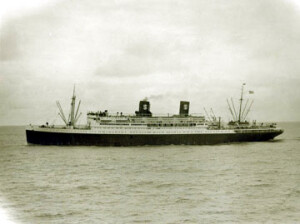 | CHINA | WRITTEN ON VERSO: TAKEN OF THE PRESIDENT HOOVER AS SHE WAS STEAMING INTO THE WANGPOO RIVER ON HER MAIDEN VOYAGE TO SHANG HAI, TAKEN FROM THE DECKS OF THE USS BLACK HAWK. PRESIDENT HOOVER (STEAMSHIP) SAN FRANCISCO, CALIF. BUILT 1931, AT NEWPORT NEWS, BY NEWPORT NEWS SHIP BUILDING COMPANY, OWNED BY THE DOLLAR LINES LTD. 21,936 T, 615.6 X 81.3 X 28.2. | CURATOR NOTES: View of vessel steaming into the Wangpoo River on her maiden voyage to Shanghai. | P0001.003/01-#PB104 | |||||
| 17 | 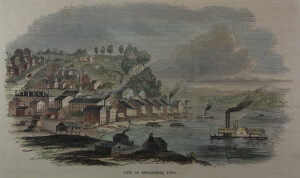 | SHORT DESCRIPTION: The print shows the town of Burlington, Iowa along the Mississippi River. The town is on the left, with buildings along the shore and also rising along the hills and on the bluff overlooking the scene. There is a church and log cabins among the buildings. On the right of the print is the opposite shore of Illinois. On the river there are flatboats and three side paddle wheel steamships. NOTES: From page 252 of volume 8 of “Ballou’s Pictorial Drawing-Room Companion,” published April 21, 1855. TEXT: “This flourishing place, a view of which we give below, and once the residence of the famous Black Hawk, who is here buried, was laid out in 1834. It is the shire town of Des Moines county, and is situated on the west bank of the Mississippi, 88 miles southwest from Iowa City, to which the seat of government was removed from Burlington in 1839. As our engraving shows, it is finely situated, and surrounded by hills of gentle ascent and moderate elevation, affording many fine building sites. The streets are regular, its private residences neat and elegant, and its churches and other public buildings large and handsome. Its manufactures and workshops attest the activity and enterprise of the people, and its commercial facilities, while accounting for its rapid growth, give assurance that it will, before many years, become a vast and wealthy city. Like our other local views, this illustrative drawing was executed expressly for the Pictorial. We shall embrace in the course of publication all the prominent cities, public buildings, and natural curiosities of the United States, thereby giving it a permanent value and national character.” | CL16363 | |||||||
| 18 | 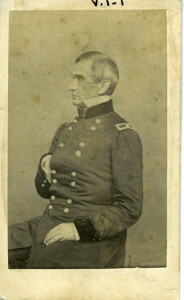 | 1861-1865 | photographer stamp on verso: Published by E. Anthony, 501 Broadway, New York, from photographic negative, Brady's Natioal Portrait Gallery. | Side view of Robert Anderson sitting down in photographers studio in uniform with left hand in coat Napoleon style. A southerner by birth, Robert Anderson was born near Louisville, Kentucky, in 1805. His brother, Richard, was a lawyer, politician, and diplomat, and Anderson, after graduating from West Point in 1825, briefly served as his brother's private secretary when he was minister to Colombia. He then pursued a career in the military, serving in the Black Hawk and Florida wars, and later as a captain under General Winfield Scott in the Mexican War. An expert in artillery, Anderson was honored for his bravery in the field. During the secession crisis, Anderson, now a major, was chosen to command the federal forts in Charleston Harbor. The appointment owed much to his southern ties. Southern born, married to a Georgian, he was a defender of slavery. He seemed to the Buchanan administration likely to be cautious and tactful in his duties, thereby avoiding actions provocative to South Carolina. Southerners thought Anderson would be sympathetic to their demands that the forts be turned over to the South. Indeed, Anderson himself seemed to think that if war could be avoided, the seceding states might, ultimately, return peaceably to the Union. He wished to avoid an outbreak of fighting and, as his situation at Sumter deteriorated, he considered evacuation both necessary on military grounds and desirable in terms of avoiding provocation. These sentiments raised some doubt in Lincoln's mind about his loyalty. However, Anderson held firmly to the Union and to his responsibilities as an officer. On arriving in Charleston, Anderson situated himself at Fort Moultrie, and urgently called for reinforcements from the War Department. Although President Buchanan initially agreed, he reversed himself under pressure from southern members of his cabinet, and Anderson was ordered to take no action that would tend to provoke aggression. However, he was instructed to hold the forts and defend himself if attacked. Anderson considered his move from Moultrie to Sumter on December 26, 1860 consistent with these instructions. By placing his command in the most defensible position, he hoped to avoid bloodshed. After the fall of Fort Sumter, Anderson evacuated his garrison to New York, where he was treated as a hero. Promoted to brigadier general, he returned to active duty as commander of Union forces in Kentucky. But failing health, perhaps hastened by the mental and physical demands of his Sumter service, forced him to retire from active duty. He retired to New York City, briefly emerging from private life to attend the flag-raising ceremonies at Sumter in April 1865. After the war, he and his wife left for Europe, hoping to improve his condition, but in 1871, he died in Nice, France. He was buried at West Point. Bibliography: Thomas Marshall Spaulding, "Robert Anderson," DAB, 1: 274-75; Ralph J. Roske, "Robert Anderson," Encyclopedia of Southern History, eds. Roller and Twyman, p. 45; Swanberg, First Blood; Meredith, Storm Over Sum ter. | P0001.016/02-APP01#001 | |||||
| 19 | 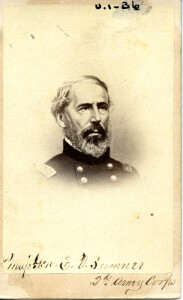 | Written on verso: Sumner, Edwin Vose, Major-Genl., U.S.A., 1797-1863. Written on recto: Maj Gen E.V.Sumner, 2nd Army Corps. | Vignette, Head and shoulder portrait, in uniform. Edwin Vose Sumner From Wikipedia, the free encyclopediaJump to: navigation, search Edwin Vose Sumner Edwin Vose Sumner (January 30, 1797 – March 21, 1863) was a career United States Army officer who became a Union Army general and the oldest field commander of any Army Corps on either side during the American Civil War.[1] His nicknames "Bull" or "Bull Head" came both from his great booming voice and a legend that a musket ball once bounced off his head. Sumner fought in the Black Hawk War, with distinction in the Mexican-American War, on the Western frontier, and in the Eastern Theater for the first half of the Civil War. He led the II Corps of the Army of the Potomac through the Peninsula Campaign, the Seven Days Battles, the Maryland Campaign, and the Battle of Fredericksburg. Early life and careerSumner was born in Boston, Massachusetts, to Elisha Sumner and Nancy Vose Sumner. His early schooling was in Milton Academy in Milton, Massachusetts.[2] In 1819, after losing interest in a mercantile career in Troy, New York, he entered the United States Army as a second lieutenant in the 2nd US Infantry Regiment on March 3, 1819. He was promoted to first lieutenant on January 25, 1825. Sumner's military appointment was facilitated by Samuel Appleton Storrow, Judge Advocate Major on the staff of General Jacob Jennings Brown of the Northern department. (Storrow had previously served as a mentor to Sumner in Boston.) In recognition of their long-standing friendship, Sumner would later name one of his sons Samuel Storrow Sumner.[3] He married Hannah Wickersham Foster (1804–1880) on March 31, 1822. They had six children together: Nancy, Margaret Foster, Sarah Montgomery, Mary Heron, Edwin Vose Jr., and Samuel Storrow Sumner. His son Samuel was a general during the Spanish-American War, Boxer Rebellion, and the Philippine-American War. Sumner's daughter, Mary Heron, married General Armistead L. Long in 1860. Sumner later served in the Black Hawk War and in various Indian campaigns. On March 4, 1833, he was promoted to the rank of captain and assigned to command B Company, the U.S. Dragoon Regiment (later First US Dragoons), immediately upon its creation by Congress. In 1838, he commanded the cavalry instructional establishment at Carlisle Barracks in Pennsylvania. He was assigned to Ft. Atkinson, Iowa Territory, from 1842 until 1845. He was the fort's commander during most of that period. He was promoted to major of the 2nd Dragoons on June 30, 1846. During the Mexican-American War, Sumner was brevetted for bravery at the Battle of Cerro Gordo (to lieutenant colonel). It was here that he gained the nickname "Bull Head" because of a story about a musket ball that bounced off his head during the battle. At the Molino del Rey he received the brevet rank of colonel. He was promoted to lieutenant colonel of the 1st US Dragoons on July 23, 1848. He served as the military governor of the New Mexico Territory from 1851–53, and was promoted to colonel of the 1st U.S. Cavalry on March 3, 1855. In 1856 Sumner commanded Fort Leavenworth, Kansas, and became involved in the crisis known as Bleeding Kansas. In 1857, as commander of the 1st Cavalry Regiment (1855), he led a punitive expedition against the Cheyenne.[4] and in 1858 he commanded the Department of the West. Lt. Gen. Winfield Scott assigned Sumner as the senior officer to accompany President-elect Abraham Lincoln from Springfield, Illinois, to Washington, D.C., in March 1861.[5] Civil War serviceIn February 1861, Brig. Gen. David E. Twiggs was dismissed from the Army for treason by outgoing U.S. President James Buchanan, and on March 12, 1861, Sumner was nominated by the newly inaugurated Lincoln to replace Twiggs as one of only three brigadier generals in the regular army, with date of rank March 16.[6] Sumner was thus the first new Union general created by the secession crisis. He was then sent to replace Brig. Gen. Albert Sidney Johnston, then in command of the Department of the Pacific in California, and thus took no part in the 1861 campaigns of the war. When Sumner left for California, his son-in-law Armistead Lindsay Long resigned his commission and enlisted with the Confederate Army eventually becoming Robert E. Lee's military secretary and an artillery brigadier general. In November 1861, Sumner was brought back east to command a division, and on May 5, 1862 he was promoted to major general in the Union Army.[7] When Maj. Gen. George B. McClellan began organizing the Army of the Potomac in March, Sumner was given command of one of its new corps. McClellan had not originally formed corps within the Army; Sumner was selected as one of four corps commanders by President Lincoln, based on his seniority. The II Corps, commanded during the war by Sumner, Darius N. Couch, Winfield Scott Hancock, and Andrew A. Humphreys, had the deserved reputation of being the one of best in the Eastern Theater. Sumner, who was the oldest of the generals in the Army of the Potomac, led his corps throughout the Peninsula Campaign and the Seven Days Battles. McClellan originally formed a poor opinion of Sumner during the Battle of Williamsburg on May 5, 1862. During McClellan's absence, Sumner directed the inconclusive battle, which failed to impede the Confederate withdrawal up the Peninsula, and McClellan wrote to his wife, "Sumner had proved that he was even a greater fool than I had supposed & had come within an ace of having us defeated."[8] At the Battle of Seven Pines, however, Sumner's initiative in sending reinforcing troops across the dangerously rain-swollen Chickahominy River prevented a Union disaster. He received the brevet of major general in the regular army for his gallantry at Seven Pines. Despite this honor, during the Union retreat of the Seven Days, McClellan expressed reluctance to name a second in command during his absences, knowing that Sumner was the most senior corps commander. Sumner was wounded in the arm and hand at the Battle of Glendale. Despite his old-fashioned ideas on discipline and respect for commanding officers, the II Corps troops generally had a positive opinion of him. In the fall of 1862, at the Battle of Antietam, Sumner was the center of controversy. A morning attack he ordered Brig. Gen. John Sedgwick's division to launch into the West Woods was devastated by a Confederates counterattack; Sedgwick's men were forced to retreat in great disorder to their starting point with over 2,200 casualties. Sumner has been condemned by most historians for his "reckless" attack, his lack of coordination with the other corps commanders, accompanying Sedgwick's division personally and losing control of his other attacking division, failing to perform adequate reconnaissance prior to launching his attack, and selecting an unusual line of battle formation that was so effectively flanked by the Confederate counterattack. Historian M.V. Armstrong's recent scholarship, however, has determined that Sumner did perform appropriate reconnaissance and his decision to attack where he did was justified by the information available to him.[9] When Maj. Gen. Ambrose Burnside succeeded to the command of the Army of the Potomac, he grouped the corps in "grand divisions" and appointed Sumner to command the right grand division. In this capacity, the old cavalry soldier took part in the disastrous Battle of Fredericksburg, in which the II Corps suffered heavy casualties in frontal assaults against fortified Marye's Heights. Soon afterward, on Maj. Gen. Joseph Hooker's appointment to command the army, Sumner was relieved at his own request, apparently disillusioned with the quarreling in the army and also thoroughly exhausted. He was reassigned to a new command in Missouri effective in the spring. Before that, Sumner went to his daughter's home in Syracuse, New York to rest. While there, he suffered a heart attack and died on March 21. GraveSumner is buried in Section 8, Lot 1 of Oakwood Cemetery in Syracuse. Part of the Teall family plot, the gravesite has some structural problems and issues of disrepair. The Onondaga County Civil War Round Table is currently raising funds to repair the grave and the general area. See also Biography portal United States Army portal American Civil War portal List of American Civil War generals Notes1.^ Warner, p. 489. 2.^ "Sumner, Edwin Vose". Appletons' Cyclopædia of American Biography. 1900. 3.^ The Sumner–Storrow relationship is discussed in unpublished 19th century correspondence of the Storrow family (copies of which are held by descendants). The Storrow–Brown relationship is described in Morris. 4.^ Bertbrong, pp. 133-40; Grinnell, pp. 111-21. 5.^ Dupuy, p. 719. 6.^ Eicher, pp. 716-17. The two other line-officer brigadier generals in the regular army as of March 1861 were John Wool and William S. Harney; Joseph E. Johnston, Quartermaster General of the Army, resigned on April 22 to join the Confederate States Army. 7.^ Eicher, p. 519. 8.^ Armstrong, p. xvi. 9.^ Armstrong, pp. 39-55. [edit] ReferencesArmstrong, Marion V. Disaster in the West Woods: General Edwin V. Sumner and the II Corps at Antietam. Sharpsburg, MD: Western Maryland Interpretive Association, 2002. Bertbrong, Donald J. The Southern Cheyenne. The civilization of the American Indian series. Norman: University of Oklahoma Press, 1979. OCLC 254915143. Dupuy, Trevor N., Curt Johnson, and David L. Bongard. The Harper Encyclopedia of Military Biography. New York: HarperCollins, 1992. ISBN 978-0-06-270015-5. Eicher, John H., and David J. Eicher. Civil War High Commands. Stanford, CA: Stanford University Press, 2001. ISBN 0-8047-3641-3. Grinnell, George Bird. The Fighting Cheyenne. The civilization of the American Indian series. Norman: University of Oklahoma Press, 1956. ISBN 978-0-8061-0347-1. First published 1915 by Charles Scribner's Sons. Morris, John D. Sword of the Border: Major General Jacob Jennings Brown, 1775-1828. Kent, OH: Kent State University Press, 2000. ISBN 0-87338-659-0. Warner, Ezra J. Generals in Blue: Lives of the Union Commanders. Baton Rouge: Louisiana State University Press, 1964. ISBN 0-8071-0822-7. This article incorporates text from a publication now in the public domain: Chisholm, Hugh, ed. (1911). "Sumner, Edwin Vose". Encyclopædia Britannica (11th ed.). Cambridge University Press. U.S. Army Combined Arms Research Library biographies Territorial Kansas Online biographical sketch | P0001.016/02-APP01#036 | ||||||
| 20 | 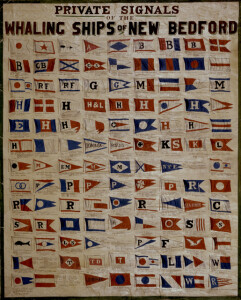 | SHORT DESCRIPTION: Oil painting on canvas by C. Newton titled 'Private Signals of the Whaling Ships of New Bedford.' There are many company/merchant flags shown with the names of their vessels and dates of operation underneath each flag. Looking at the dates of the vessels the painting appears to have been created sometime in the 1840s and received modifications as new ship's were added to each. There do not appear to be any entries made after 1869. NOTES: For information, see New Bedford Whaling Museum finding aids. Newspaper and other references found in object file. Gideon Allen and his brother, William, were whaling agents and investors from 1830 to 1887. Philip Anthony worked as a ship chandler and sold hardware at 91 Union in the 1841 New Bedford City Directory. He owned ship Menkar from at least 1845 to 1854. James Arnold was a merchant at Rotch's square. He owned the ship Cambria, which transported Frederick Douglass in 1847. George F. Barker and Abraham Barker were merchants at 117 Union in the early 1840s, also sold provisions and groceries from that address. Chapman & Bonney existed in at least the 1850s. In 1854 they purchased the schooner Union to be rigged as a brig and used in the North Atlantic whale trade. In 1859 their sail lofts burned in a fire. Coggshall should be spelled Coggeshall Cook & Snow was a partnership between Thomas Cook (1801-1890) and Loum Snow that began in 1828. They were wholesale and retail dealers in dry goods, merchant tailors, and outfitters, but also became involved in whaling trade. Snow left the partnership in 1859 and started his own company; his son joined him in 1867 to create Loum Snow & Son. Cornell & Penniman are listed in this painting as agents for bark Eliza in 1857, they were still agents for her in 1860. Oliver & George O. Crocker were brothers. In 1841 the firm of George O. Crocker & Co. had George T. Baker and Oliver Crocker as partners, and David Crocker as a laborer. They were merchants operating from 7 Commercial wharf. By 1843 the partnership between Baker, Crocker, & Co. of Boston and George O. Crocker & Co. of New Bedford had dissolved, leaving Baker to partner with Edmund Whitney to create Baker & Whitney selling sperm oil, candles, and other general commission business from their stores at 80 and 84 Water Street, which had been the address for Baker, Crocker, & Co. See The Boston Post, February 6, 1843. Elisha Dunbar & Co. was a partnership between Captain Elisha Dunbar and Edward C. Jones. Elisha Dunbar married Ann Howland in 1820, the daughter of John Howland Sr., who built them a house at 46 South Street. Edward Coffin Jones began his career as a stock boy, who worked his way up to being a ship owner and partner. When Dunbar died in 1839 Jones continued the firm alone. William Watkins worked for the company before starting his own (see below). John P. Knowles worked as a partner with T. & J.P. Knowles with Thomas. By 1887 The Boston Globe reported that John P. Knowles 2d was a ship merchant who was in debt. In 1890 the newspapers reported him as an insolvent debtor paying 40 per cent dividend. T. Knowles & Co.: Thomas Knowles worked with John P. Knowles and Joseph Knowles in th 1849 directory as dealers in groceries, provisions, dry goods, etc. at 24 Union. Jos Dunbar & Co. was Joseph Dunbar, a mercantile and whaling agent company. Henry F. Thomas (born 1824) worked for his father then joined Dunbar as a clerk and worked his way up to being a partner in 1845. He took control from 1850 to 1875. The company is listed in the 1836 and 1841 directories located at 9 Middle with Asa T. Lawton as a partner. Rodney French (1802-1886) was a quaker and merchant. He was an abolitionist who supported the Civil War. He won the 1853 mayoral election for New Bedford and a street in New Bedford is named Rodney French Blvd in his honor. William Gifford was a whaling agent for the ships Charles Drew, Minerva, and bark William Gifford. His son, Charles H. Gifford, became a partner and the company name became William Gifford & Son. William died in 1866 and Charles continued the company for a few years. Lawrence Grinnell was a whaling agent who began his career in the counting room of Fish & Grinnell in New York (which later became Grinnell & Minturn, see QO 1030 and QO 1024). He returned to New Bedford to work as a whaling agent, sold sperm oil and candles, and worked with the Mutual Life Insurance Company of New York. Hathaway & Luce was a partnership between William Hathaway Jr. (1798-1885) and Matthew Luce (circa 1802-1852) in 1838. Hathaway was a sailor who became master, and was well traveled. When he partnered with Luce they worked as agents and commission merchants until Luce died in 1852. Hathaway continued the company until the Civil War when he sold several ships and had a few captured by the Confederates. T.S. & F.S. Hathaway was Thomas Schuyler Hathaway (1796-1821) and Francis S. Hathaway (1803-1869). Their father, Humphrey Hathaway (1765-1821) was a ship builder and involved in the whale oil industry. A third brother, Nathaniel, was also a partner until his death in 1836; two of his sons became partners later in life. A.H. Howland was Abner Howland, whose family was very active in the New Bedford whaling industry and also very wealthy. He is a nephew of John Howland Sr., and Abner's home still stands at 22 South Sixth Street. Edward Wing Howland was a whaling agent, owner, and also outfitted whaling vessels in partnership with his brother, Cornelius, and his nephew, George Howland Barney. Edward died in 1879. George & Matthew Howland: George Howland Sr., was a whaling agent who eventually owned nine whaling vessels, a counting house, a wharf, a candle factory, stores, houses, and land. His daughter used his home at 245 Walnut Street to educate fugitive slaves. The home was built as a wedding gift in 1811, and on the wedding day George and his wife Susan watched the launch of the ship George & Susan from their front porch. Frederick Douglass worked for him as a young man. Lemuel Killock & Son should be spelled Lemuel Kollock. He was a ship chandler and grocer in the 1841 city directory, at 3 Whaleman's slip at the corner of Central wharf. Issac Howland Jr. & Co. should be Isaac Howland Jr. & Co. His father, Isaac Howland Sr., began a company where Jr. worked until it failed, but he managed to stay involved in the industry and start his own company. Isaac Jr.'s daughter, Abby Howland, married Edward Mott "Black Hawk" Robinson in 1833 and he took control of the company when Isaac Jr. died in 1834. Robinson was known for his ruthless business tactics and grew the company into a strong, successful venture that made them very wealthy. His daughter, Hetty Green, learned the finances from her father and became the wealthiest woman in America when she died in 1916. Green was known for her stingy financial practices, neglecting medical care for herself and her children to save money. Her son wound up with an amputated leg. John & James Howland were brothers. James started his career at sea but barely survived several dangerous voyages so he retired to life on shore to work with John. James built a house between 1808 and 1815 at 21 South Sixth Street that still stands, but at one time had an observation tower in the yard so that he could still watch the harbor. Charles Waln Morgan lived from 1796 to 1861. He partnered with William Rotch Sr. and Samuel Rodman Sr. as merchant shippers, then worked for himself from 1819 until his death. He owned all or part of numerous whaling vessels.. T. & A.R. Nye were Asa R. Nye and Thomas Nye, Jr. They were merchants at 8 Middle Street in the 1836 and 1841 city directories. Frederick Parker lived from 1806 to 1861, son and partner of prominent whaling merchant John Avery Parker. John hired William Phillips in 1825 and his son, George R. Phillips, in 1848. John died in 1853 and Frederick continued the company. When Frederick died William and George continued the company under the name of William Phillips & Son (incorrectly spelled twice in painting as Philips). Jireh Perry was a merchant with a counting room at 11 Middle Street in the 1841 directory. Ebenezer Perry appears in the record as his son, and Pardon Tillinghast was a partner. Lorenzo Peirce was a cooper who eventually owned 3/4 of the bark Addison from 1860-1867. Pope & Morgan: Samuel Griffitts Morgan was the nephew of Charles W. Morgan and worked as a clerk for his uncle until partnering with William G.E. Pope in about 1836. The 1841 city directory has Pope & Morgan as commission merchants and dealers in duck, iron, etc. in Rotch's Square. Andrew H. Potter was a clerk for the Register Office in 1841. By 1861 the New York Times reported that he worked for A.H. Potter & Co. and was arrested for his part in outfitting the ship Brutus for carrying slaves. Chas. S. Randle may be Charles S. Randall, who went on to be a politician. Thomas Riddell partnered with Thomas R. Dix as merchants with a counting room at 29 Rotch's Square. Barton Ricketson was partnered with Charles Wood, merchants at 31 Centre in 1841. Samuel W. Rodman was a leading manufacturer of cotton goods. The 1841 directory has his office at 3 Rodman, by 1842 he built a large house with a guest house at what is now 35 Seventh Street. The Rodman family had been involved in the whaling industry since 1798 when Samuel Rodman Sr. started working as a merchant, banker, an invested in textile mills. His sons were Samuel Rodman Jr. and Benjamin Rodman. Samuel Jr's son, Thomas Rotch Rodman, also worked for the company. Thomas worked in his father's whaling ventures, then fought in the Civil War before working for the Wamsutta Mill that his father and uncle funded. William Rotch Rodman lived at 388 County Street, built between 1833 and 1836. The Rotch family was another prominent, highly successful whaling family in New Bedford. It began with William Rotch Jr. in 1787, who had worked for his father's counting house in Nantucket. He taught his sons, William Rodman Rotch, Joseph Rotch, and Thomas Rotch, who all worked as whaling agents. Joseph's son, William James Rotch, attended Harvard, founded the New Bedford Cordage Company with his brother, and became mayor. William James married two of Charles W. Morgan's daughters. O. & E.W. Seabury were Otis and Edward W. Seabury, outfitters and agents for whaling ships. Several brothers were also involved in the whaling industry and occasionally contributed to the business. They were Humphrey W., Charles Pinkney, William Harrison, and Jason. Swift & Allan should be spelled Swift & Allen. They were ship chandlers, agents, and commission merchants from 1842 to 1891. Frederick Slocum Allen had worked with Thomas C. Lothrop from 1832 to 1836, then with Ireneus Gooding from 1836 to 1841. He then partnered with his brother-in-law, Jireh Swift, to create Swift & Allen. Their decline began with the Civil War and the company closed for good in 1891. W.C.N. Swift & Eben Perry were William Cole Nye Swift and Eben Perry. The partnership began in 1849, they hired William H. Aiken in 1865, and they hired Frederick Swift (W.C.N.'s son) in 1875. Aiken and Frederick Swift took over control in 1879 and the name became Aiken & Swift, which eventually moved operations to San Francisco by the 1880s. Aiken died in 1893 but Frederick Swift continued working. Oben N. Swift should be spelled Obed N. Swift. He worked with W.C.N. Swift (see above) as live oak contractors at 56 Fifth Street in 1841, prior to W.C.N.'s partnership with Eben Perry. The Taber family is another with long connections to the New Bedford whaling industry. Henry Taber went to sea in 1809 and by 1832 was working as a ship chandler and grocer as Henry Taber & Co. He partnered with David Sherman, then with his son, William Gordon Taber, then with his son-in-law John Hunt. When Henry Taber retired in 1866, William G. Taber and William Gordon Jr. took over and changed the name to Taber, Gordon & Co. Other family members involved in the whaling industry include Henry Taber's cousins, Francis Taber and George Russell Taber, who operated as F. & G.R. Taber, as well as Francis' son, Robert Holloway Taber. Thomas & Dow was a partnership between Sylvanus Thomas and William F. Dow, which had financial difficulties in 1846. Dow also worked as principal of the William Street Boys' School, and Thomas worked with Zephaniah Eddy as Eddy & Thomas in at least 1841. Thomas later created Sylvanus Thomas & Co., and hired George S. Homer in 1859. Homer became a partner by 1867 and partnered with his brother, Frederick, after Thomas died. The company existed into the 1870s. West & Paine started in 1816 by John P. West. It became West & Paine when Samuel S. Paine joined, then S.S. Paine until 1861 when Paine's brother, George Paine, joined and the name changed to S.S. Paine & Bro. They were dealers in brick and lime at 12 Hazard's wharf. John P. West's son, Simeon N. West, was also a whaling agent. W. & G.D. Watkins started in 1840. William Watkins had worked for Elisha Dunbar until that company closed and he started his own. It became William & George D. Watkins from 1851 to 1862. In 1878 George bought the company and partnered with Jonathan Handy to create Watkins & Handy. Tucker & Cummings was a partnership between Charles Smith Cummings and his brother-in-law, Abner R. Tucker in 1853. When Tucker left the company in 1881 Benjamin Cummings joined and the name became C.S. & B. Cummings. Benjamin Cummings also worked with his brother-in-law, Charles H. Gifford, in Gifford & Cummings. Charles Smith Cummings had learned the business from his father and two uncles who were part of William Cummings & Co. Wood & Nye: Willard Nye (1811-1865) started his career with David R. Greene & Co. and was a partner with them by 1836 with Dennis Wood. By 1850 Wood and Nye created their own company as merchants and agents. Nye died in 1865 but Wood continued the company after that. Nye also served as a Representiative twice and Mayor of New Bedford. (See A Genaeology of the Nye Family) | CL12616 |
Created 2026 by Don Barker, CBMM volunteer, for the Chesapeake Shipbuilding Project. shipbuilding@sailingworkboats.es